About
Mahato Psychiatry Rotations
A complete psychiatry residency curriculum, built rotation by rotation. Every rotation is a sequence of short, quiz-first, case-based modules — each with a pre-test and post-test, and score-change reports your program can take to the PEC. Module and lesson counts adapt to the length of each rotation.
The rotation map
Numbered in build order. Rotation 1 is live — each new rotation ships its Module 1 first, then the rest of the rotation.
- 1Emergency PsychiatryLiveLegal statuses, agitation, suicide risk, disposition. All 12 modules built — Module 1 open now, the rest open as released.
The full rotation map — 8 rotations plus selected electives
- 2Inpatient PsychiatryLiveMilieu, rounds, and the long-stay patient.
- 3Consultation-Liaison PsychiatryLiveDelirium, capacity consults, and the medical floors.
- 4Child & Adolescent PsychiatryLiveDevelopment, families, and the pediatric ED.
- 5Addiction PsychiatryLiveWithdrawal, motivational interviewing, and medications for addiction.
- 6Geriatric PsychiatryLiveDementia, delirium, and prescribing in late life.
- 7Outpatient PsychiatryLiveContinuity clinic, psychotherapy, and longitudinal care.
- 8Forensic PsychiatryLiveCommitment, capacity, competency, and the courts.
- 9Selected elective rotationsPlannedElective depth — shaped with our pilot programs.
Rotation 1: Emergency Psychiatry
The worked example, live now: Module 1 (Legal Statuses) is complete — its universal core works in every state, and the NY supplement is the worked state example. All twelve modules are built; Modules 2–12 open to programs as they clear review. Built for the hours between patients, not lectures — fully self-paced.
Who this is for
Psychiatry residents (intern through PGY-4) — starting with those on the emergency psychiatry rotation, the first in the curriculum. No prior knowledge is assumed — every term is explained in plain language before the technical name appears. If you are brand new to the emergency psychiatry rotation, start at Module 1.
How it works
1. Take the pre-test (17 questions) — it unlocks the lessons.
2. Work through the lessons — each opens with a real ED scenario, then teaches, then checks understanding. Decision trees for the high-pressure questions.
3. Take the post-test (17 questions — the same blueprint as the pre-test, in new scenarios).
4. Your progress and scores are saved to your account; your program director and faculty see your individual results — completion, scores, and score changes — on the program dashboard.
Built on the evidence base
- ACGME Program Requirements for Psychiatry (2026) — emergency experience must be in an organized, supervised psychiatric emergency service, including crisis evaluation, management, and triage; the requirements contemplate asynchronous learning as a didactic activity, with protected time.
- Psychiatry Milestones 2.0 — each module maps to the subcompetencies it serves (PC1–PC5, MK, SBP, PROF, ICS), and progress is recorded in those terms. Completion documents participation, pre/post tests document knowledge, and faculty sign-off documents observed practice — three kinds of evidence, kept distinct. The pre/post testing and progress tracking themselves serve PBLI — residents watch their own score changes and the program improves the rotation from the data.
- Brasch et al. 2004 (AAEP) — the model emergency-psychiatry curriculum; ten skill domains.
- Project BETA (AAEP) — best practices in the evaluation and treatment of agitation: de-escalation, medical evaluation, pharmacologic treatment.
- CPA Position Paper 2024 — what programs actually teach (and what they skip): suicide risk, agitation, violence risk, and mental-health-act law lead the list.
About this pilot
This is a pilot build: the full platform (accounts, progress tracking, pre/post testing, program dashboard) plus one complete module. Every module ships after Dr. Mahato’s clinical review. Legal content: the universal core works in every state; the NY supplement covers New York State law.
Educational content only; not legal advice.
Built by a psychiatrist, not a publisher
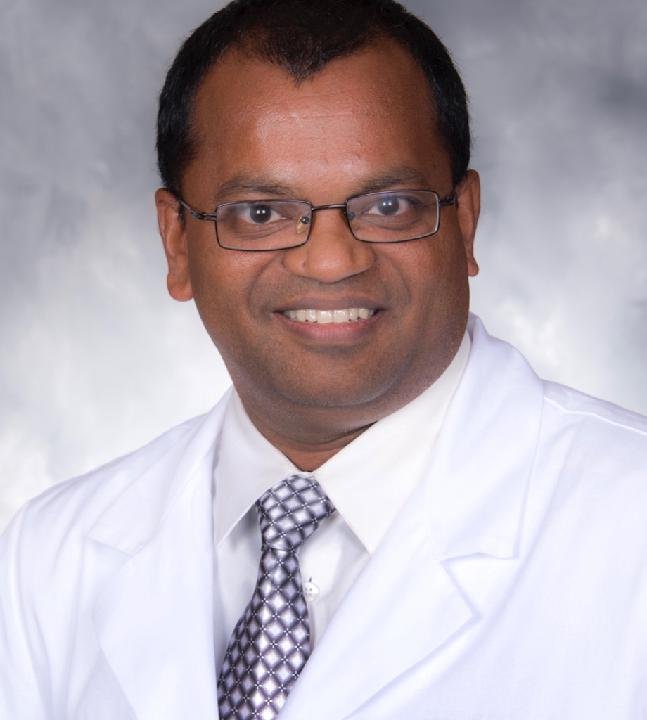
Dr. Bisundev Mahato
Dr. Mahato is a board-certified psychiatrist (ABPN, 2021) and Core Faculty at Garnet Health Medical Center, where he helped establish the Catskills hospital as a training site. He supervises and teaches residents across the emergency department and inpatient units.
He began his studies at Brown in computer science and applied mathematics before transferring to Harvard, earning his AB in Economics cum laude (2003). After his AB, he did health policy research at Columbia University and the Commonwealth Fund — tutoring and mentoring premeds and co-teaching a master’s-level health economics course — and completed a postbaccalaureate premedical program at Columbia before returning to Harvard for his MD (2015).
He completed two years of anesthesiology residency training at UC Irvine (2015–2017) before psychiatry residency at Garnet (2018–2021). He has served as an expert witness in involuntary treatment and retention hearings in New York and California.